A list proposed that will change our way of thinking.
http://www.afa.org/EdOp/2012/RAND_CP689.pdf
PSYCHOLOGY
Thinking, Fast and Slow (2011)
One of today’s greatest thought
leaders, DANIEL KAHNEMAN,
explores the way we think and
choose, and why humans are
prone to flawed thinking.
“Current and brilliant. I also
urge people to watch his Nobel
speech on the web.”
—PROFESSOR PAUL DAVIS,
policy analysis
“ e content is essential for
policy analysts. And the communication style is exemplary.”
—PROFESSOR FRANK CAMM,
economics
POLITICAL SCIENCE
Bureaucracy What Government Agencies Do and Why They Do It (1991)
In this classic text, JAMES Q.
WILSON examines a range of
U.S. bureaucracies—including
the Army, FBI, CIA, FCC, and
the Social Security Administration—and sheds light on what
they do, why they operate the
way they do, and how they
might become more responsible
and effective.
“For those who are concerned
with e ciency in the public
sector, this analysis is insightful, comprehensive, thoroughly
engaging, and—more than
two decades later—completely
relevant.”
—PROFESSOR FABIAN DUARTE,
game theory
MATHEMATICS How to Solve It
A New Aspect of Mathematical Method (1945)
This book by one of the
twentieth century’s most
prominent mathematicians
approaches problem-solving
in a way that sticks. What was
originally a chapter in one of
GEORGE PÓLYA’S books became
so popular that it was published
separately and remains a standalone classic to this day.
“Pólya de nes four principles in
problem solving—(1) understand
the problem; (2) devise a plan;
(3) carry out the plan; and (4)
review and extend the solution—
a clear and compelling approach
to all types of problems. ese
principles have stuck with me
since I was a high school senior,
and I highly recommend this to
students at all levels.”
—PROFESSOR NATALIE CRAWFORD,
mathematics
STATISTICS
How to Lie with Statistics
(1954)
In the introduction, author
DARRELL HUFF writes, “This book
is a sort of primer in ways to
use statistics to deceive. It may
seem altogether too much like a
manual for swindlers. Perhaps I
can justify it in the manner of the
retired burglar whose published
reminiscences amounted to a
graduate course in how to pick
a lock and muffle a footfall:
The crooks already know these
tricks; honest men must learn
them in self-defense.”
“A classic. More quantitative
in nature, but it gives Time
Magazine–type illustrations of
why you should never fully
trust the media when they are
presenting data.”
—PROFESSOR BART BENNETT,
operations research
ANALYTIC DESIGN
The Visual Display of
Quantitative Information
(1983)
Some images are better than
others. EDWARD TUFTE’S classic
will help you convey your message with words, numbers, and
pictures, and with clarity, precision, and efficiency.
“To be an e ective policy analyst
you have to be able to communicate the results of your research
clearly and e ectively. is book
illustrates how statistical graphics
can be the simplest, yet most
powerful way to describe, explore, and communicate complex
data. Tufte lays out the criteria
for e ective graphical displays
and provides many examples to
illustrate the key concepts.”
—PROFESSOR JEANNE RINGEL,
health economics and
mathematics for policy analysis
SOCIOLOGY
Everything Is Obvious*
*Once You Know the
Answer
How Common Sense
Fails Us (2011)
DUNCAN J. WATTS demonstrates
how commonsense reasoning and history mislead us into
believing that we understand
more about the world of human
behavior than we do, and why
attempts to predict, manage, or
manipulate social and economic
systems often go awry.
“It’s a great look at how historical
events often have commonsense
explanations that are useless for
policy development.”
—PROFESSOR DAVID KENNEDY,
anthropology
POLITICS/CURRENT
EVENTS
It’s Even Worse Than
It Looks
How the American
Constitutional System
Collided with the New
Politics of Extremism (2012)
Political dysfunction in the
United States—putting political
advantage ahead of good government—has reached a critical
point, calling into question the
country’s ability to govern itself.
THOMAS E. MANN and NORMAN J.
ORNSTEIN caution that there is no
magic panacea to fix a problem
so complex, but they do discuss
how greater public participation
and some media reforms can
help ease the gridlock.
“Mann and Ornstein provide a
bipartisan approach to describing
the problem of increasing extreme
partisanship and its impact on
public policy. ey then o er up
what they believe could be done
and needs to be done to get the
American political system back
on track.”
—DEAN SUSAN L. MARQUIS,
policy analysis
POLITICAL SCIENCE
Democracy in America (Volume 1, 1835; Volume 2, 1840)
According to translator Harvey C. Mansfield, ALEXIS DE
TOCQUEVILLE’S Democracy in
America is “at once the best
book ever written on democracy
and the best book ever written
on America.” This is essential
reading for anyone interested in
history, or emerging democracies.
“A wide worldview is essential
for the policy analyst. is book
remains an eye-opener.”
—PROFESSOR LOIS DAVIS,
public health
ESSAYS/CULTURAL
STUDIES
Representations of the Intellectual
The 1993 Reith Lectures (1996)
In these six essays, delivered
as part of the BBC’s esteemed
lecture series, EDWARD SAID
explores what it means to be
an intellectual in the age of
information.
“If you read only one book
on this list, make it this slim
volume. Said argues than an
intellectual should be independent and an ‘amateur’ operating
outside institutional structures.
If you read this and buy Said’s
arguments, you will never ever
buy into prepackaged thoughts.
And never assume that famous
people have the only interesting
things to say. Often, the reverse
is true.”
—PROFESSOR KRISHNA KUMAR,
economic development
LEADERSHIP
Smart Choices
A Practical Guide to Making Better Decisions (1999)
HAMMOND, KEENEY, and RAIFFA
blend the art and science of
decisionmaking into a straightforward approach to making difficult choices. This book will be
of interest not only to students
of policy analysis but also to
anyone who makes business,
personal, or family decisions—
i.e., everyone.
“ is book succeeds very well
in its aim to provide a practical
roadmap on how to think about
and make hard decisions. It is an
easy read with good examples of
decisions many people face, but
it slips in most of the concepts
of decision theory. e authors
are justly renowned for their
expertise and their ability to
communicate ideas clearly.”
—PROFESSOR EMMETT KEELER,
decision analysis
Thursday, July 19, 2012

Friday, January 13, 2012
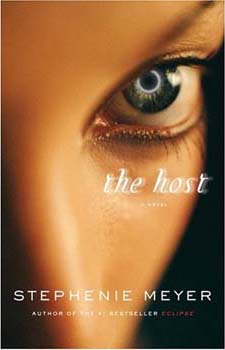
The Host by Stephanie Meyer
While on vacation in Cancun in December 2011, I finally read The Host. http://www.stepheniemeyer.com/thehost.html .

Marea had recommended it to Elaine a year and a half ago. Elaine read it in one sitting and really liked it. I have not read any of her "Twilight Saga" -- but after reading The Host, I can see how her handling of mental "dialog" in her characters could make "vampire stories" more interesting. I think she did a masterful job of defining a "science fiction universe" where a believable type of aliens could invade earth. I clearly understood the motivations and even biological/evolutionary development of the aliens. They weren't "bad" like some sci-fi monsters, they were just doing their natural evolutionary task.
I had the feeling, when reading it, that she put extra effort to make sure the book was suitable for young adults --sort of a "PG" rating, not even a "PG-13".
I could see, at the end of the book that there could be some very good sequel possibilities. I was pleased to learn from Marea that Stephanie has announced that she is writing a sequel, and maybe a third book sequel as well. It is also exciting to know that there will be a move in March 2013. http://www.stepheniemeyer.com/thehost_movie.html. I think the tricky part in producing/directing a movie of The Host, will be handling the internal mental dialog between Melanie (the host) and Wanderer (the alien inside of Melanie). Will they do it with two different voices? What will be on the screen while the mental dialog is going on? If the producer/directors figure out a good, effective way, of handling that dialog, I think the movie could be a huge success. Of course, the actors, and particularly the actress who plays Melanie will have a real challenge, and could make or break the movie's success.
Marea had recommended it to Elaine a year and a half ago. Elaine read it in one sitting and really liked it. I have not read any of her "Twilight Saga" -- but after reading The Host, I can see how her handling of mental "dialog" in her characters could make "vampire stories" more interesting. I think she did a masterful job of defining a "science fiction universe" where a believable type of aliens could invade earth. I clearly understood the motivations and even biological/evolutionary development of the aliens. They weren't "bad" like some sci-fi monsters, they were just doing their natural evolutionary task.
I had the feeling, when reading it, that she put extra effort to make sure the book was suitable for young adults --sort of a "PG" rating, not even a "PG-13".
I could see, at the end of the book that there could be some very good sequel possibilities. I was pleased to learn from Marea that Stephanie has announced that she is writing a sequel, and maybe a third book sequel as well. It is also exciting to know that there will be a move in March 2013. http://www.stepheniemeyer.com/thehost_movie.html. I think the tricky part in producing/directing a movie of The Host, will be handling the internal mental dialog between Melanie (the host) and Wanderer (the alien inside of Melanie). Will they do it with two different voices? What will be on the screen while the mental dialog is going on? If the producer/directors figure out a good, effective way, of handling that dialog, I think the movie could be a huge success. Of course, the actors, and particularly the actress who plays Melanie will have a real challenge, and could make or break the movie's success.
Subscribe to:
Comments (Atom)